Dough water temperature calculator
Water is the one ingredient you can easily warm or cool. Type the temperature you want the dough to be and the temperature of everything else, and you get the water temperature that lands the dough there.
How the formula works
When you mix ingredients, the dough ends up close to the average of their temperatures, plus a little heat from mixing. So you multiply the temperature you want by the number of things you're averaging, then subtract everything you can't change:
Water = (dough temperature × 4) − room − flour − starter − friction
Without starter in the dough, it's × 3 and the starter drops out. The weights of the ingredients don't come into it, so the formula is a rule of thumb. It usually lands within a couple of degrees, which is close enough for bread.
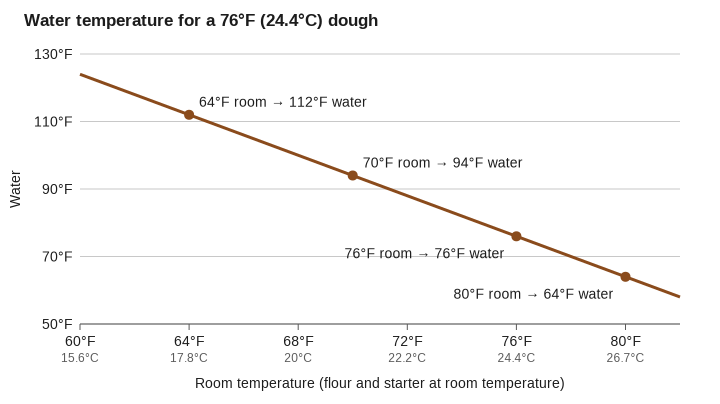
Each degree the room drops asks for three degrees more in the water, because the room, flour and starter all get colder together.
Why dough temperature matters
A sourdough's rise speeds up as it gets warmer and slows down as it cools. Two doughs made from the same recipe, one at 72°F and one at 78°F, can be hours apart at the end of bulk fermentation. Hitting the same dough temperature each time makes the timings in your recipe mean something.
Questions
What temperature should sourdough be after mixing?
Most recipes aim for 75 to 78°F (24 to 26°C). Some bakers go cooler, around 72°F (22°C), for a slower bulk on a busy day, or warmer when they want to bake sooner.
What if the calculator asks for very hot water?
In a cold kitchen you may get a number above 100°F (38°C). Mix the warm water into the flour first, then add the starter once the mix has cooled a little, so the starter never sits in hot water. You can also warm the flour or put the dough somewhere warmer during bulk.
What if it asks for water below freezing?
That happens in a hot kitchen or with a long machine mix. Use ice water, chill the flour in the fridge for an hour, and accept a dough a degree or two warmer than planned. Then shorten the bulk to match.
What is the friction factor?
The heat added by mixing. Hand mixing and a few sets of stretch and folds add very little. A stand mixer running for several minutes adds more. The only reliable way to know yours is to measure it once with the second form on this page.
Do I need a thermometer?
Yes. A cheap instant-read probe thermometer works for the water, the flour and the dough. Guessing room temperature from a thermostat is usually close enough.